Wayscriber
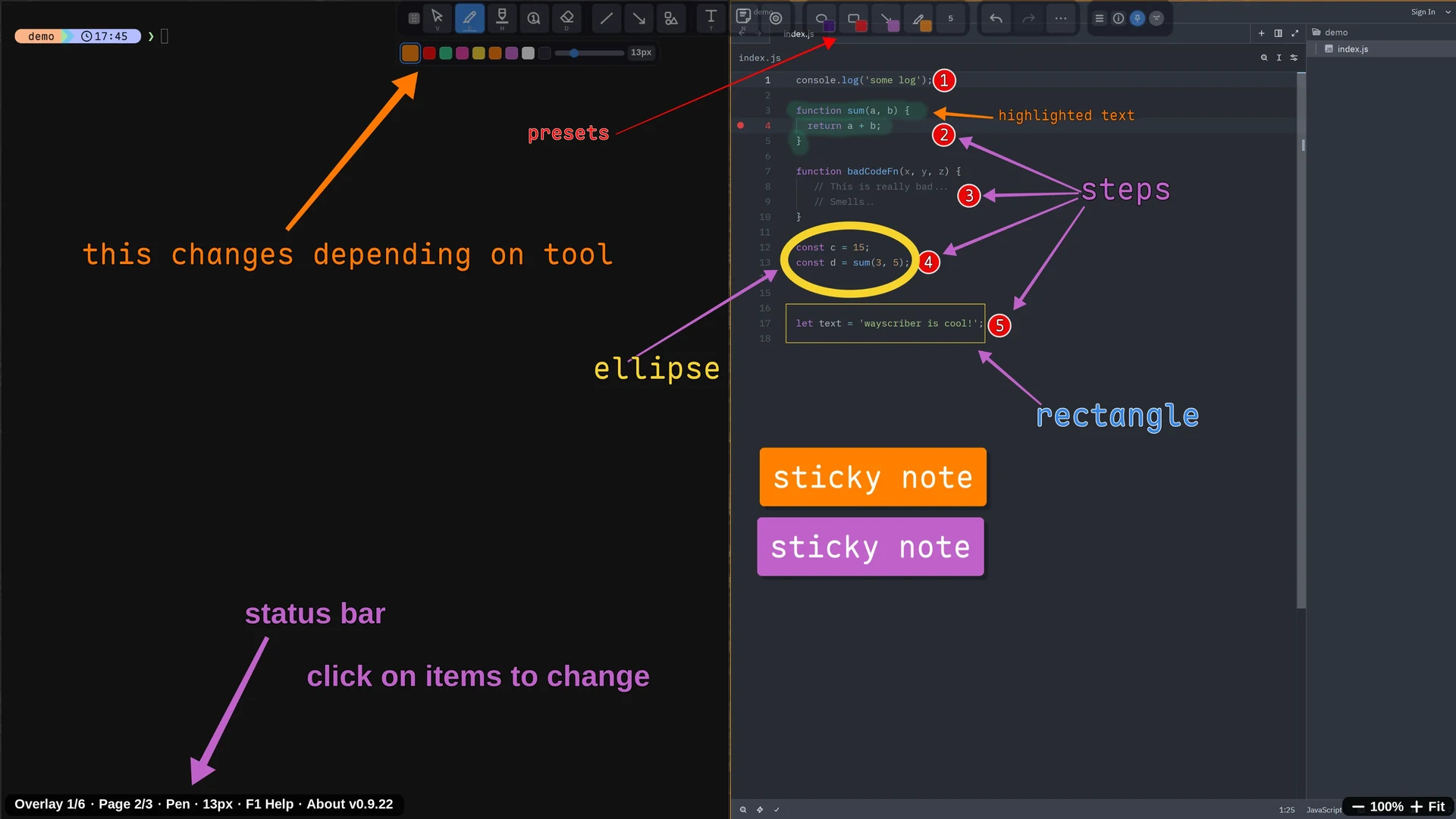
A native annotation and presentation layer for Wayland: draw over any app, zoom into details, capture the screen, and keep persistent boards between sessions.
Visible work
Public GitHub contributions and Codex usage across the last year.

Codex for Open Source · Maintainer dossier
Wayscriber is a screen-annotation tool for Wayland. I am its creator and primary maintainer, responsible for the product, code, releases, packages, and support.
I also build Harnet, a .NET agent harness with public code that I currently develop privately, and contribute to the Omarchy ecosystem.
Building for the web since 2005Professional developer since 2013Codex user since September 2025
A native annotation and presentation layer for Wayland: draw over any app, zoom into details, capture the screen, and keep persistent boards between sessions.
A native .NET agent harness built around normalized model APIs, typed tools, explicit authorization, durable sessions, headless hosts, and a terminal UI.
01 / Maintainer signal
Wayscriber serves presenters, teachers, developers, and screen sharers who need a ZoomIt-style workflow on modern Linux desktops. It spans Hyprland, Sway, River, Wayfire, Niri, COSMIC, Plasma, and a portal-backed GNOME path.
Snapshot from 27 August 2026. Also: 23 forks, 76 resolved issues, nine contributors, and 1,698 commits since the repository began in October 2025.
Wayscriber ships through signed DEB and RPM repositories, AUR packages, Nix, and direct GitHub releases. Every feature has to survive packaging, upgrades, optional dependencies, compositor differences, and old saved sessions.
See the product and installation pathsPeople found and reviewed Wayscriber outside its repository, through video, magazines, tutorials, and practical guides in several languages.
02 / The maintenance loop
Recent pull requests show the range: interaction design, rendering, persistence, performance, refactoring, documentation, and regression coverage move together.
Magnification had to remain correct across rendering, wheel gestures, undo history, saved sessions, captures, exports, panned canvases, and transparent backgrounds.
A 1×–4× loupe with explicit failure behavior, durable state, high-resolution input handling, and coverage across the complete rendering lifecycle.
A fast-growing native application needs mechanical pressure against functions accumulating too many responsibilities.
The Rust workspace now enforces a cognitive-complexity threshold, with existing hot spots split along real ownership boundaries.
A failed Save As operation could leave session sidecars in a partially moved state and make recovery less predictable.
Sidecar cleanup now commits as one transaction, with rollback behavior protecting user drawings and session history.
Turning a dense screenshot into a useful artifact often means removing repeated empty rows or columns without leaving the capture flow.
Region review now previews and applies sequential horizontal and vertical cuts while preserving capture ownership and delivery guarantees.
03 / Codex in practice
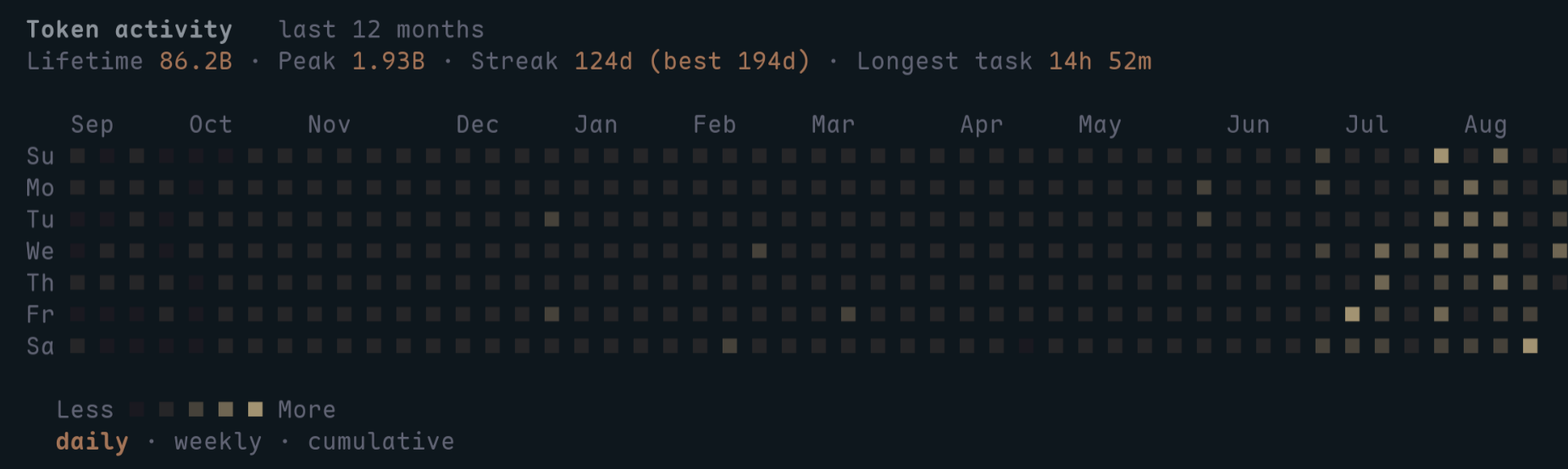
The activity matters because it maps to an everyday workflow: investigate an issue, read the actual code, make a focused change, test the behavior, review the complete diff, and repeat until it is safe to ship. After months with Claude Code, I deliberately moved my daily workflow to Codex in September 2025 and stayed with it.
318 / 319
From 12 October 2025 through 26 August 2026, only 24 April was missed. This is activity across the full window, with a best recorded streak of 194 days.
Token values are activity reported by the Codex CLI itself. They are shown as evidence of sustained practice, not as a substitute for project impact.
04 / Technical depth
Harnet explores a provider-neutral loop, typed authorization, durable append-only and branchable sessions, versioned extensions, headless hosts, and a terminal interface.
Current status: I am building Harnet, but it is not fully ready yet. The code is public, while development currently happens privately. It is not packaged for general use yet.
Provider-normalized APIs and a provider-neutral agent loop.
Typed tools, authorization intent, and auditable effects.
Append-only, branchable sessions designed for durable operations.
CLI, headless protocols, versioned extensions, and a rich TUI.
API credits would support two connected tracks: maintainer automation that directly serves Wayscriber, and private Harnet dogfooding toward a production-ready reference for durable agent workflows, model adapters, and safe tool execution.
View Harnet’s public code05 / Beyond two repositories
Roslyn analyzers for reliability, performance, ASP.NET Core, and EF Core mistakes that deserve a build-time answer.
GitHubA resilient screen-recording workflow for Omarchy and Hyprland—my daily Linux environment—covering recovery, menus, and desktop integration.
GitHubA cross-platform TOTP manager with a terminal UI, QR support, and fast keyboard-first access to local secrets.
GitHubOmarchy ecosystem
I created Omarchy plugins and contribute to the wider ecosystem. The next goal is safer installs and updates, clearer permissions, and small reliability fixes upstream.
Permissions, capture indicators, VPN state, failed services, and removable drives.
Windows, monitors, wallpapers, scratchpads, and minimized apps.
GitHub work, repository health, calendars, screen time, focus sessions, and rules.
Wayscriber controls, key displays, game mode, and workspace switching.
What six months unlocks
Daily implementation, issue investigation, review, regression work, and release preparation across Wayscriber and Harnet, with more capacity for upstream Omarchy contributions.
Deeper work across Wayscriber’s capture and package surface, Omarchy and its plugin ecosystem, and Harnet’s agent-and-tool trust boundaries.
Issue triage, cross-layer impact checks, release notes, DEB/RPM/AUR/Nix preflights, and private Harnet dogfooding toward a future packaged release.
Application repository: Wayscriber · Primary maintainer: Ibrahim Šuta